


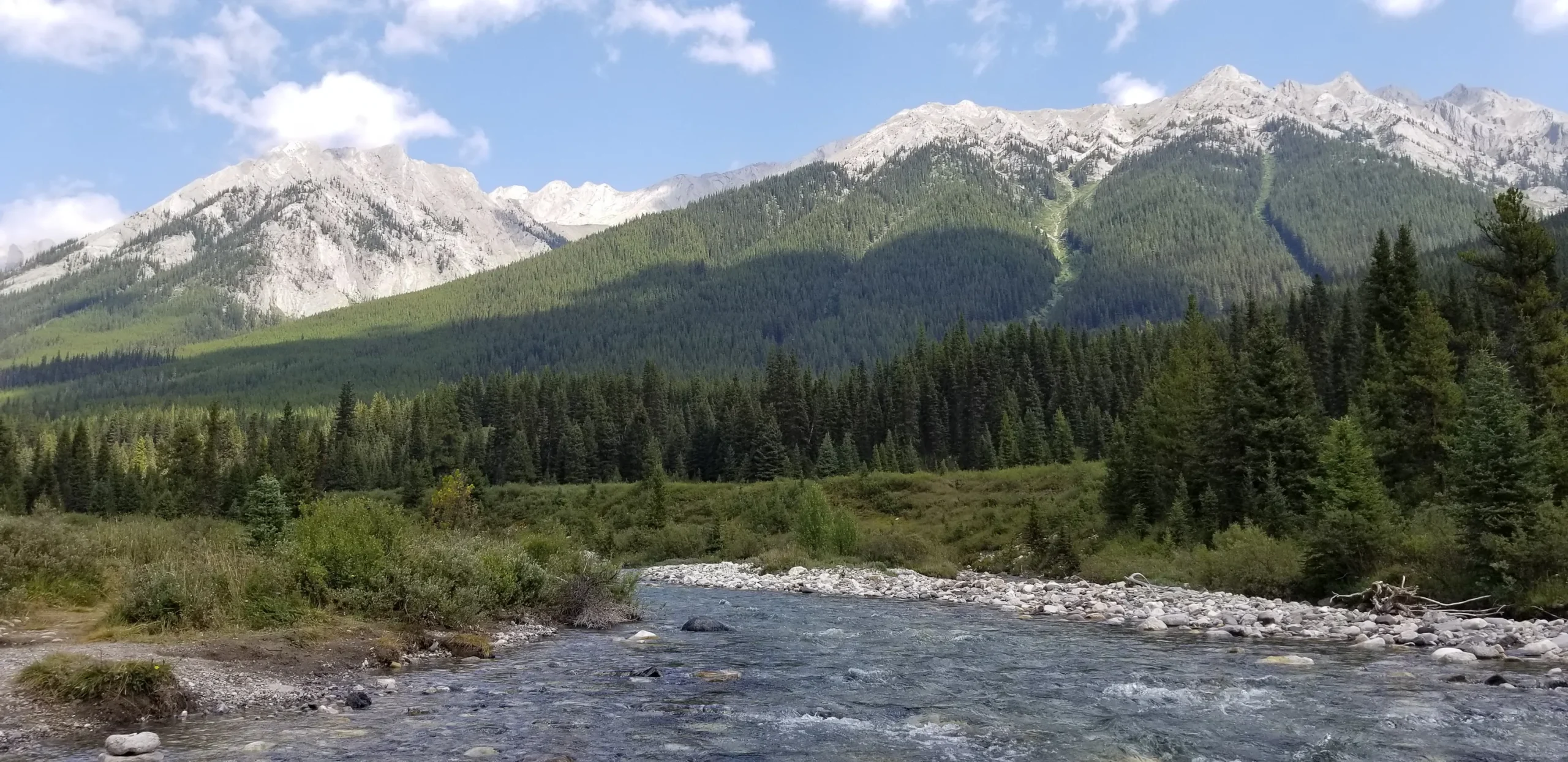
Most people who hike Johnston Canyon turn around at the Upper Falls, having gotten their photos and called it a day. But push on another 3 km or so through quiet forest and the trail opens into a meadow holding one of Banff’s most overlooked landmarks: the Ink Pots. After the drama of the canyon’s waterfalls and narrow rock walls, these seven small, bubbling springs feel almost anticlimactic at first glance. Spend a few minutes there, though, and they tend to win people over with a different kind of beauty – quieter, stranger, and honestly a little hypnotic.
So What Exactly Are They?
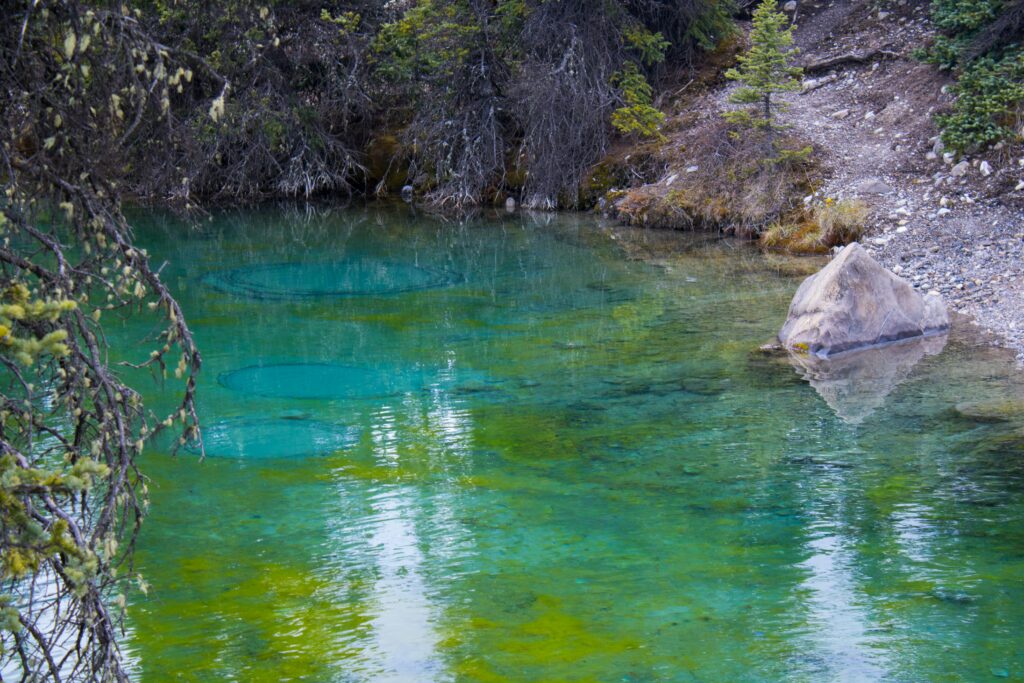
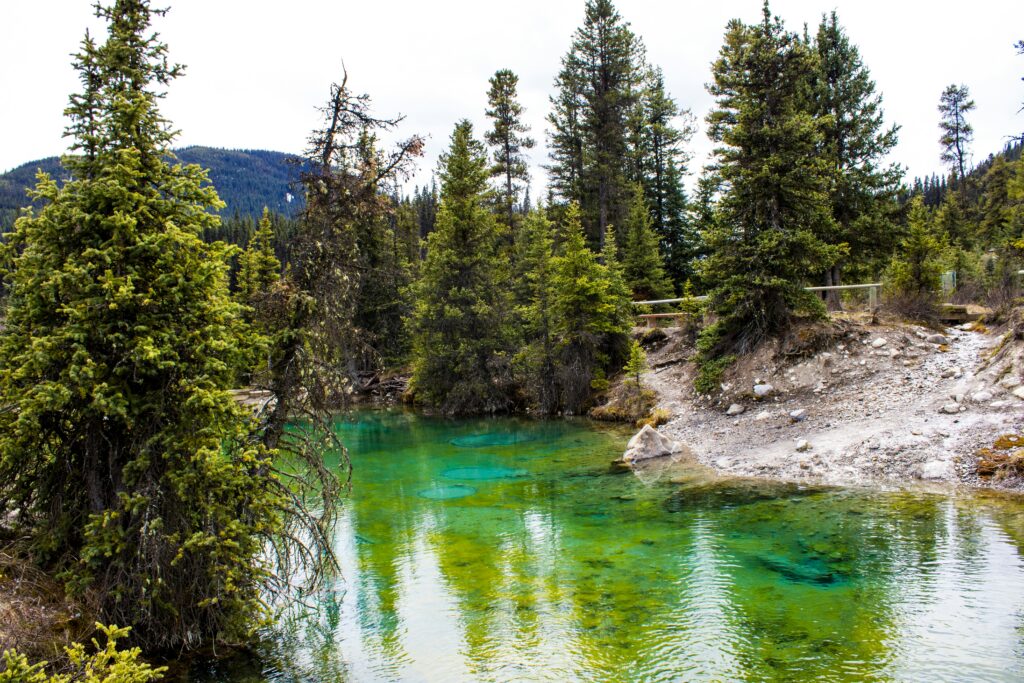
The Ink Pots are cold mineral springs, not fed by runoff or a stream like most water features in the park, but by groundwater pushed up from deep underground. Each pool stays in constant, gentle motion as fresh water wells up from below, which is why they never quite freeze over even in the dead of winter and stay clear and strangely vivid year-round. The name comes from the dark, ink-like coloring on the pool floors, caused by mineral deposits and plant growth. With the vibrant colouring and constant bubbling, the pools almost come alive!
How They Got There
The story underneath the Ink Pots goes back millions of years. Over time, rain and melting snow seep down through layers of limestone. As the water travels through the ground, it picks up minerals, before getting forced back up through cracks in the earth. The minerals are what gives the water its bright blue-green hue, and the process is what keeps the water at a constant temperature year-round (unlike Johnston Canyon, which freezes over!). It’s a small but genuinely rare geological feature for this part of the Rockies, and one reason researchers still keep an eye on the site for environmental monitoring.
The Ink Pots Came First
The Ink Pots were a known feature of the Bow Valley long before Johnston Canyon was a known trail. Indigenous peoples moving through the valley relied on its water sources and wildlife, and though the mineral content of the water made it unsuitable for drinking, the bubbling springs stood out as a landmark. It wasn’t until European explorers and settlers arrived, drawn first by Johnston Canyon’s waterfalls, that the springs picked up their current name – chosen simply for how they looked, dark pools with water moving at the surface, rather than for any particular function. Over time, what had been a small addition to the canyon became its own destination, with the trail eventually extended to include them as a natural extension of the Johnston Canyon hike.
Worth the Extra Distance
The hike out to the Ink Pots isn’t a casual add-on — it roughly doubles the length of a standard Johnston Canyon outing. It trades the steep canyon walls for open meadows, offering a very different feel from the first half of the trail. The Ink Pots are a rewarding addition to the canyon hike. As with anywhere in the park, the usual rules apply: stay on the marked trail, leave the pools undisturbed rather than wading in, and give wildlife and vegetation their space, so the site stays this way for whoever comes after you.
For a lot of hikers, the Ink Pots end up being the part of Johnston Canyon they remember most. The waterfalls are the show-stoppers everyone comes for, but the springs are where the trail’s geology and history actually come together — proof that not every natural wonder needs to be dramatic to be worth the walk.